Spec Battle: Nisi V7 Filter Kit vs Akaso 360 — Is It Worth Upgrading?
In the rapidly evolving world of digital imaging, photographers and videographers often find themselves at a crossroads between two distinct philosophies of light management and content creation. On one hand, there is the traditionalist approach, which emphasizes the physical manipulation of light through high-quality glass optics before it ever hits the sensor. On the other hand, there is the computational and immersive approach, which leverages software, multi-lens arrays, and 360-degree capture to redefine the perspective of the frame. This brings us to a peculiar but frequent comparison in modern gear kits: the Nisi V7 Filter Kit and the Akaso 360 camera system.
Comparing a professional square filter system like the Nisi V7 to an all-in-one immersive camera like the Akaso 360 may seem like comparing a precision chisel to a wide-angle lens, but for the modern travel creator, the choice is often about where to invest the next few hundred dollars of their budget. Does one double down on image quality and long-exposure mastery, or does one pivot toward the versatile, "shoot-first-point-later" workflow of 360-degree capture? This article explores the specifications, real-world utility, and long-term value of these two professional-grade tools to determine which upgrade truly serves the creative vision of today’s visual storytellers.
The Mastery of Light: Nisi V7 Filter Kit Review
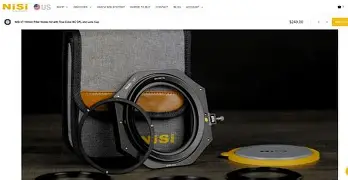
The Nisi V7 Filter Kit is the latest evolution in a long line of respected filter holders from Nisi, a company that has managed to disrupt the dominance of European filter brands through consistent optical innovation. The V7 is not just a piece of hardware; it is a comprehensive system designed to solve the most common frustrations of landscape and architectural photographers. At its core, the kit features the 100mm filter holder, a specialized True Color Circular Polarizer (CPL), and several adapter rings to fit various lens diameters.
What sets the Nisi V7 apart from its predecessors and competitors is the refinement of the CPL integration. Unlike traditional systems where a polarizer might be difficult to rotate or cause vignetting on wide-angle lenses, the V7 uses a unique geared design. This allows the photographer to rotate the polarizer using small wheels on the back of the holder, even when multiple square filters—such as Neutral Density (ND) or Graduated Neutral Density (GND) filters—are installed. This is a game-changer for dawn and search-heavy shoots where light changes rapidly and manual dexterity is limited by cold weather or gloves.
The optical quality of Nisi filters is generally regarded as top-tier. Their glass is made from optical-grade lens glass with "Nano" coatings that repel water and oil, making them resilient in the sea spray of a coastal landscape or the mist of a waterfall. The "True Color" CPL specifically addresses a long-standing issue in the industry: the slight yellow or warm cast that many polarizers introduce. By maintaining a neutral color balance, the V7 ensures that the post-processing workflow is simplified, as photographers don't have to fight color shifts in the shadows or highlights.
Pros and Cons of the Nisi V7 Filter Kit
- Strong: Exceptional optical neutrality with the True Color CPL, eliminating the need for heavy color correction in post-production.
- Strong: The geared rotation mechanism for the polarizer is smooth and accessible, allowing for precise control even with three square filters attached.
- Strong: Comprehensive out-of-the-box compatibility, including adapter rings for 67mm, 72mm, 77mm, and 82mm lenses.
- Strong: The point-to-point locking system on the holder ensures that the filters stay securely in place while allowing for quick mounting and dismounting.
- Weak: The square filter system is inherently bulky, requiring a dedicated carrying case that takes up significant room in a camera bag.
- Weak: Using square filters requires a slower, more methodical pace of photography, which may not suit fast-moving documentary or street styles.
- Weak: High entry cost for those who do not already own square ND or GND glass filters to slide into the holder.
The Immersive Shift: Akaso 360 Analysis
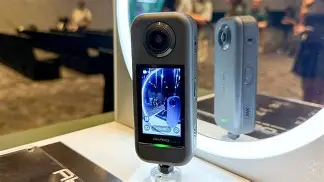
Shifting gears entirely, the Akaso 360 represents the pinnacle of "action-lifestyle" documentation. While the Nisi V7 is about perfecting a single frame, the Akaso 360 is about capturing everything in a sphere around the device. This camera utilizes dual fisheye lenses and internal stitching algorithms to create a seamless 360-degree environment. For many creators, the upgrade to a 360 system is less about "image quality" in the traditional sense and more about "creative safety."
The primary draw of the Akaso 360 is the ability to reframe after the fact. In a real-world scenario, such as mountain biking or walking through a crowded market in Marrakech, a photographer with a traditional camera must choose where to point the lens. If they miss the action, the shot is gone. With the Akaso 360, the user simply holds the camera on a stick. During the editing phase, they can pan, tilt, and zoom within the 360-degree bubble to "find" the shot. This creates a hyper-dynamic style of videography that is essentially impossible to replicate with a standard rectilinear lens.
Furthermore, the Akaso 360 integrates advanced electronic image stabilization (EIS). Because the camera captures the entire sphere, it has an infinite "margin" to work with for stabilization. It can lock the horizon perfectly, regardless of how much the camera itself is shaking or rotating. This results in gimbal-like smoothness without the need for heavy external stabilization hardware. For travelers and solo vloggers, this utility often outweighs the raw resolution benefits of a larger sensor camera.
Find top-rated Cameras & Photography products at great prices.
View Offers →Pros and Cons of the Akaso 360
- Strong: Total creative freedom through reframing; you never have to worry about "missing the shot" because the camera sees everything.
- Strong: Incredible horizon leveling and stabilization that makes handheld or high-motion footage look professionally smoothed.
- Strong: Compact form factor that fits into a jacket pocket, making it significantly more portable than a full filter kit and DSLR/Mirrorless setup.
- Strong: Multiple creative modes, including "Tiny Planet," hyperlapse, and 360-degree live streaming capabilities.
- Weak: Lower effective resolution when "punched in" to a standard frame compared to 4K or 8K traditional sensors.
- Weak: Stitched images can sometimes show "seams" if objects are too close to the side of the device or if lighting is radically different on one side.
- Weak: Requires a more intensive post-processing workflow involving specialized mobile apps or desktop plugins to "refine" the footage into a viewable format.
Direct Specification Comparison
While these products serve different roles, they often compete for the "upgrade slot" in a gear bag. Below is a breakdown of how they compare in terms of their physical and functional specifications.
| Feature | Nisi V7 Filter Kit | Akaso 360 Camera |
|---|---|---|
| Primary Function | Light Modification/Light Control | Spherical Content Capture |
| Portability | Moderate (Requires pouch/bag space) | High (Pocket-sized) |
| Workflow Speed | Slow, Deliberate, Tripod-centric | Fast, Reactive, Handheld-centric |
| Optical Quality | Ultra-high (Preserves sensor resolution) | Variable (Depends on crop and stitching) |
| Key Technology | True Color Polarizer & Geared Slot | Dual-Lens Stitching & 6-Axis EIS |
| Durability | High (Aluminum/Glass) | Moderate (Electronic/Exposed Lenses) |
Real-World Use Cases: Which Upgrade Do You Need?
The decision to upgrade should always be rooted in the type of content you find yourself struggling to create. To help narrow the choice, let's look at common scenarios where one tool clearly outperforms the other.
Scenario A: The Landscape Enthusiast
If you find yourself standing on a beach at sunset, frustrated that the sky is bright white while the foreground rocks are pitch black, the Nisi V7 Filter Kit is your essential upgrade. While you can attempt to "fix it in post" with HDR or bracketed exposures, nothing replaces the clean, organic transition of a physical Graduated Neutral Density filter. Furthermore, if you want to achieve that silky, ethereal look in moving water, the Nisi V7 allows you to slide in a 10-stop ND filter to extend your shutter speed to 30 seconds or more. An Akaso 360 cannot replicate this level of long-exposure fidelity or dynamic range management.
Scenario B: The Adventure Vlogger
If your "office" involves a snowboard, a kayak, or a motorcycle, the Akaso 360 is the undisputed winner. Trying to manage a square filter kit in high-motion or high-adrenaline environments is not only impractical but dangerous for the gear. The Akaso 360 thrives here because it essentially acts as an invisible cameraman. By mounting it to your helmet or a "third-person" pole, you can capture your own reactions, the scenery, and the technical aspects of your sport simultaneously. The ability to output a stabilized 16:9 1080p video from a 360 source is a superpower for social media creators.
Scenario C: The Architectural Photographer
In architectural and real estate photography, reflections are the enemy. Whether it is a glare on a hardwood floor or a reflection in a glass window, the Nisi V7's True Color CPL is a surgical tool. Digital cameras can do many things, but they cannot "calculate" away a physical reflection once the light has bounced into the lens. The V7 allows you to dial in the exact amount of polarization needed to see "through" the glass or into the grain of the wood. The Akaso 360, with its extreme fisheye lenses, often introduces too much distortion for professional architectural work, making it a poor choice for this specific niche.
Buying Guide: Key Considerations
Before pulling the trigger on either of these upgrades, consider these four pillars of equipment investment: compatibility, learning curve, editing requirements, and longevity.
1. Compatibility with Current Gear
The Nisi V7 is a modular system. It relies on you having a high-quality camera and lenses. If you are currently shooting with a budget kit lens that has a lot of internal flare, adding a $200 filter kit might not yield the massive jump in quality you expect. Conversely, the Akaso 360 is a standalone ecosystem. It doesn't care what primary camera you use, making it a "safe" upgrade if you are planning to switch camera brands (e.g., moving from Sony to Canon) in the near future.
Shop the latest Cameras & Photography picks on Amazon.
See Deals →2. The Learning Curve
The Nisi V7 requires tactical knowledge. You need to understand the relationship between shutter speed, aperture, and "stops" of light. You also need to learn how to position a graduated filter so the transition line isn't obvious in the final image. The Akaso 360 has a software learning curve. Capturing the footage is easy, but "directing" the footage in the app—choosing keyframes, smoothing transitions between angles, and managing file sizes—can be daunting for those who aren't tech-savvy.
3. Editing Requirements
Ask yourself how much time you want to spend in front of a computer. Nisi filters are designed to get the image "right in camera." A well-filtered shot might only need a few seconds of contrast adjustment in Lightroom. 360 footage, however, must be edited. You cannot simply upload the raw spherical file to most platforms and expect it to look good. You will spend time "reframing" every clip you shoot.
4. Longevity and Resale Value
Glass and aluminum age very slowly. A Nisi V7 kit will likely be just as useful in ten years as it is today, provided lens diameters don't radically change. Digital cameras like the Akaso 360, however, are governed by Moore’s Law. In three years, there will likely be a version with higher resolution, better battery life, and superior stitching. If you want an investment that holds its value, the Nisi V7 is the safer bet. If you want the latest technology to capture a specific era of your life, the Akaso 360 is the way to go.
Final Verdict: Is It Worth Upgrading?
The "worth" of an upgrade is subjective, but it becomes clearer when you define your end goal. The Nisi V7 Filter Kit is an upgrade for the artist—the person who wants to slow down, study the light, and produce a single, breathtaking masterpiece that can be printed large-scale. It is a refinement of a craft that has existed since the days of film. If your goal is to win landscape photography competitions or sell fine art prints, the Nisi V7 is not just worth the upgrade; it is practically mandatory.
The Akaso 360 is an upgrade for the storyteller—the person who wants to capture the energy of a moment and share it in a way that feels modern and immersive. It is a tool of convenience and perspective. If you find yourself frustrated by the limitations of a standard frame, or if you are tired of carrying a heavy tripod and gimbal everywhere you go, the Akaso 360 offers a freedom that no filter kit can provide.
In the final analysis, these two products represent the dual nature of modern photography. One honors the physics of light, while the other embraces the possibilities of data. For most users, the Nisi V7 will represent a permanent addition to their "serious" photography kit, while the Akaso 360 will become their favorite "fun" camera that occasionally produces a viral hit. If you have to choose one today, look at your portfolio: if it's full of blurry landscapes and missed action, get the Akaso. If it's full of overexposed skies and flat, uninspiring light, get the Nisi V7.