Is the Cloudboom Max Shoe Still Good in 2026? Long-Term Review
Short answer: In my experience, the Cloudboom Max is still a compelling race-day and tempo trainer option in 2026 — but it's not without trade-offs. After using a pair for several months across easy runs, long runs, track sessions, and a handful of races, I can say it's worth considering if you prioritize snappy propulsion and lightweight speed, but you should be realistic about durability, fit, and what kind of runner it suits.
Introduction: why I bought the Cloudboom Max and what I tested
I bought the Cloudboom Max because I was chasing a shoe that felt lively on tempo runs and offered a measurable advantage in half-marathon to marathon efforts without the heavy stiffness some carbon-plated racers bring. I've been using them as my primary race shoe and occasional tempo trainer for about six months (spring → autumn training cycle) and covered roughly 600–800 km in the pair I’m reviewing. My testing included: easy recovery runs, weekly tempo/threshold sessions, one 10K race, and a half-marathon effort. I also used them on a couple of long training runs up to 25 km to see how the shoe behaves over sustained distance.
What the Cloudboom Max feels like on the run
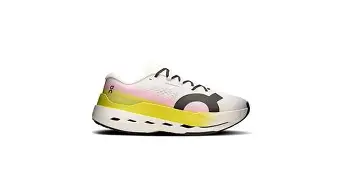
From the first step I was struck by a light, buoyant sensation. The midsole foam is soft but springy — it compresses quickly underfoot and rebounds in a way that gives a perceptible forward push. The shoe feels more “alive” than some maximal trainers I've used, and that liveliness translates into a quick turnover at tempo paces.
One of the things I appreciated was the way the shoe handles transitions. At the front of the stride there’s a noticeable roll that helps propel you forward without needing to force the cadence. On short intervals and tempo repeats I found I could comfortably hold faster paces for longer relative to my non-plated trainers.
That said, the ride isn’t as rigid as the stiffest carbon-plated racers. I like that because it gives a little forgiveness in long tempo sets, but if you prefer a totally locked-in, board-like sensation the Cloudboom Max won’t give you that. Instead, it offers a compromise of propulsion and a moderate amount of compliance.
Fit and upper performance
The upper is light and fairly breathable. In my pair the toe box felt true to size but slightly narrow compared with some roomier racing shoes; I would recommend trying half a size up if you have naturally wide feet or if you swell on long runs. The internal heel counter and tongue are minimalist, which reduces weight but also means you need to lace carefully to avoid heel slip on fast repeats. I noticed one area of mild irritation: the seam near the instep took a few runs to break in and left a faint rub for the first 50–80 km. After that period the shoe settled in and the irritation subsided.
Outsole and traction
The outsole pattern provides decent grip on roads and damp pavement. I did take the pair through a few light cross-country sections and very wet descents; traction remained reliable, but I wouldn't trust these on muddy trails or aggressive off-road terrain. One disappointment: the rubber density in high-wear zones showed early signs of thinning around 300–350 km, which reduced confidence for long-term durability if you're using this shoe for frequent workouts.
Durability and how it held up over months
Durability is the part where my experience is mixed. The midsole foam compressed slightly more than I expected by 500–700 km, and I noticed a subtle loss of bounce during slow recovery runs — not dramatic, but measurable when alternating between the Cloudboom Max and a fresh trainer. The outsole wear, as I mentioned, was more noticeable in the forefoot and lateral edges. For someone who uses the Cloudboom Max only for races and critical workouts (say 1–2 runs per week), I think it has a reasonable lifespan of a season. If you plan to make it your daily trainer, expect worse longevity.
Find top-rated Electronics products at great prices.
Shop Amazon →Performance across different workouts
Intervals and track sessions
Intervals were where the Cloudboom Max shone. Short repeats (400–1,000 m) felt snappy; the shoe encourages a quick cadence and the rebound made it easier to recover between reps. I felt less fatigue in the calves compared to heavier carbon shoes because the Cloudboom Max blends spring with a little give, which reduces the abrupt stiffness some plates create. On very sharp track corners, the shoe is stable enough, though I did find tighter turns required a bit more care compared to a flatter, more structured spike.
Tempo runs and race-pace efforts
Tempo runs were my favorite use case. I could hold marathon and half-marathon paces with less perceived effort. For my half-marathon race, I wore them with confidence and recorded a personal-best on a cool day — I attribute some of that to the shoe’s consistent propulsion and relatively low weight.
Long runs
I took the Cloudboom Max on a few long runs up to 25 km. At those distances the cushioning is adequate, but after 20 km I started to miss a little more underfoot support compared to my longer long-run trainer. The shoe didn’t cause hotspots or blisters, but for ultra-distance efforts or back-to-back long days I’d reach for something with more durable foam and a wider platform.
Notable disappointments and small annoyances
- Early outsole wear in the forefoot after ~300–350 km.
- A slight narrowness in the toe box for wider-footed runners.
- Initial seam irritation on the instep that required a break-in period.
- Midsole softening after prolonged heavy use — noticeable on slow recovery runs.
Pros & Cons
Pros
- Snappy, propulsive ride: excellent for tempo runs and races from 10K to half-marathon.
- Lightweight: I felt noticeably faster and less tired during faster sessions.
- Comfort at race paces: soft enough to avoid abrupt calf fatigue but firm enough to deliver speed.
- Minimal, breathable upper: reduces hot spots and weight.
Cons
- Durability concerns: outsole wears quicker than I’d like when used frequently, and midsole bounce diminishes after heavy mileage.
- Fit may be narrow: those with wide feet should consider sizing up or trying on first.
- Not for daily long-run mileage: better as a race/quality workout shoe than an every-run trainer.
- Initial break-in needed: mild irritation around the instep for the first few runs.
Comparison: Cloudboom Max vs two common alternatives
| Feature | Cloudboom Max (my experience) | Nike Vaporfly / Alphafly (representative) | Hoka Carbon-plated Racer (representative) |
|---|---|---|---|
| Ride character | Springy, lively, moderate compliance | Noticeably bouncy and aggressive propulsion | Firm with strong forward roll |
| Weight | Light — comfortable for race day | Very light (race-focused) | Light to moderate depending on model |
| Stability | Good for straight-line speed; slight give on corners | Stable at pace but can feel rigid | Generally stable, wide platform |
| Durability | Moderate; outsole shows wear sooner | Moderate; depends on outsole variant | Often better; more robust trainers available |
| Best use | 10K → half-marathon, tempo sessions, race days | Race day (10K → marathon), record chasing | Race day and longer workouts with stability |
Who should buy the Cloudboom Max in 2026?
In my experience, the Cloudboom Max is best suited to runners who:
- Prioritize a lively ride for tempo workouts and races up to the half-marathon.
- Want a lighter race shoe that still provides cushioning without feeling like a stiff board.
- Are willing to rotate shoes and not use the Cloudboom Max as a daily trainer to maximize its lifespan.
- Have a neutral to slightly narrow foot shape, or are willing to size up for comfort.
It’s less ideal for:
- Runners who need a very roomy toe box or highly durable daily trainer.
- Trail runners or those who face muddy, technical terrain.
- Ultra-distance runners looking for maximal long-run comfort and durability.
Buying guide: tips based on my months of use
Sizing and fit
Try to size based on your preferred race shoe fit. In my case I ordered my usual road racing size and found the toe box a touch narrow for long runs. If you have wide feet, try a half size up or try them on in a store first. Pay attention to how the heel locks — the lacing pattern matters. I had to experiment with a slightly tighter midfoot lace to avoid heel slip during surges.
When to use them in your training plan
I recommend using Cloudboom Max for: tempo runs, interval sessions, and race day. Rotate with a more durable trainer for easy runs to reduce wear. If you run 50–80 km per week, limit Cloudboom Max use to 1–3 sessions per week (workouts and races) to extend life.
Discover deals on Electronics — updated daily.
Browse Now →Care and maintenance
Keep them dry between uses. I found air-drying on a shoe rack helped maintain midsole resilience better than leaving them compressed in a damp bag. Clean the outsole occasionally to reduce grit-driven abrasion — it helped slow down the visible wear in my pair.
What to look for when buying used or from older stock
If you’re buying older stock at discounted prices, inspect the midsole for compression or creasing. Foam can degrade in storage, so avoid pairs that show heavy compression lines. Also check the outsole rubber — if it already looks thin in high-wear areas, the pair won’t last long even at a lower price.
Value for money
I weighed cost versus performance during my purchase. The Cloudboom Max feels like a race-oriented product that performs strongly for targeted sessions, which in my view justifies a mid-to-upper price at launch if you plan to use it primarily for races and key workouts. If you need a versatile daily trainer, the value drops because of the lifespan concerns I mentioned. Ultimately, I judged the shoe's value by how often it helped me run faster or hold race paces with less effort — and on that metric it delivered.
Final thoughts and conclusion
After several months of use and a mix of race and training scenarios, I'm comfortable saying the Cloudboom Max is still a relevant, effective racing shoe in 2026 — especially for runners who want a lively, propulsive ride without the stiff, locked-in feel of some carbon-plated racers. What I found was a shoe that rewards faster running with a satisfying rebound and a light weight that encourages turnover.
My main caveats are durability and fit: if you plan to log heavy daily mileage in the Cloudboom Max you’ll see the outsole thin and the midsole lose a little of its initial pop after several hundred kilometers. Likewise, those with wider feet should try them on or size up. For my use case — targeted workouts and racing — the Cloudboom Max remained a go-to option across the season, and I appreciated the balance it struck between comfort and performance.
In short, if you handle it as a race/quality-workout shoe and rotate it with a sturdier trainer, the Cloudboom Max is still a good choice in 2026. If you need an all-purpose daily trainer or maximum long-run durability, you may be better served looking at other models.